
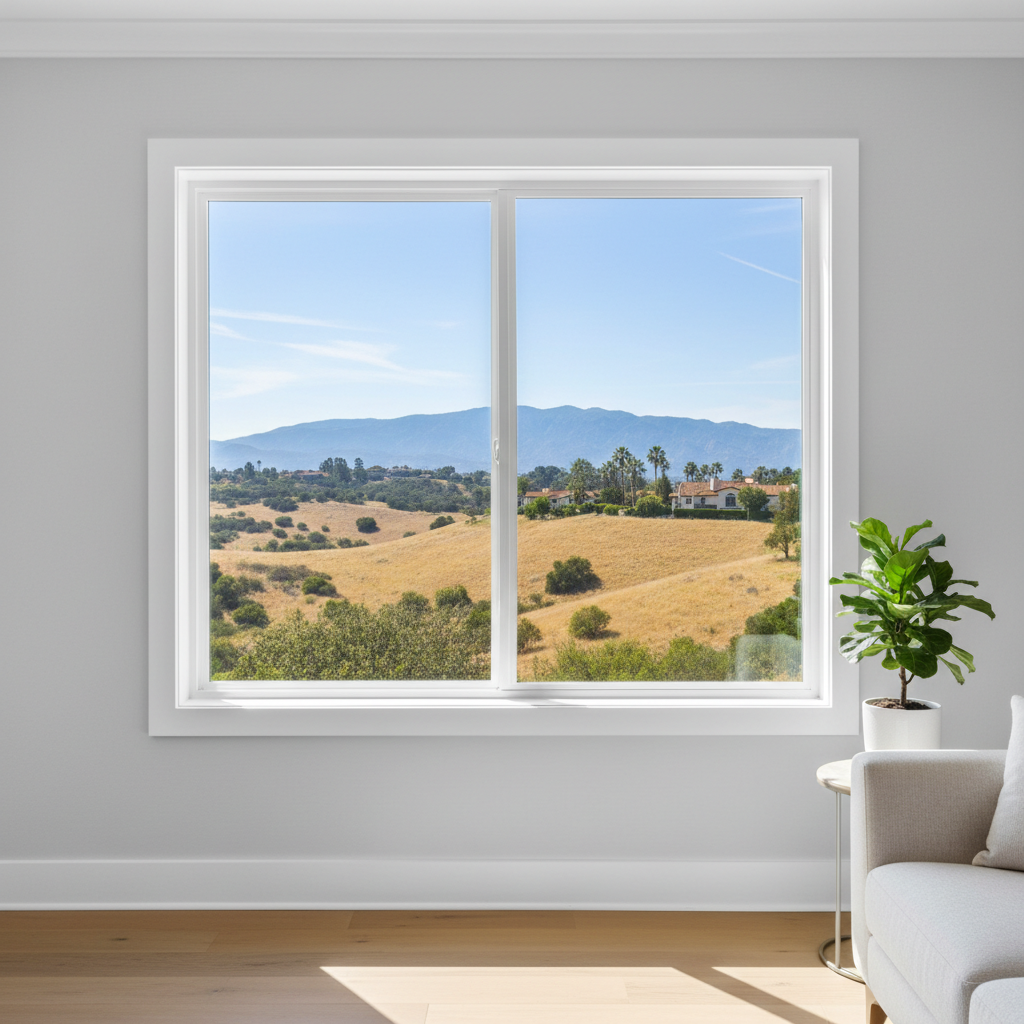
A couple in Roseville walked into my shop last October. They were replacing all 18 windows in their 1990s tract home and had spent three weeks researching online. Double hung? Casement? Sliding? Every site they'd read recommended something different. By the time they sat down across from me, they were more confused than when they started.
The answer turned out to be straightforward. Different rooms need different window types. We used three types across their house — casement in the kitchen, double hung in the bedrooms, and picture windows flanked by casements in the living room. Every room got the right window for its purpose. That's how it works in practice: there's no single best window type, just the right type for each opening.
I'm John, owner of Colfax Glass, and I've been installing windows across the Sierra Foothills for over 25 years. This guide breaks down six residential window types by cost, energy efficiency, ventilation, and best room fit. I'll cover California's 2026 Title 24 requirements, real installed pricing, and which types make the most sense for our foothills climate. No jargon. Just what I'd tell you if you were sitting in my shop.
TL;DR: Double hung windows are the most versatile and affordable ($400–$900 installed). Casement windows seal the tightest and are the most energy efficient ($430–$1,060). Sliding windows handle wide openings on a budget. California Title 24 requires a U-factor of 0.30 or lower and SHGC of 0.23 or lower. This guide compares 6 window types by cost, efficiency, ventilation, and best room fit.
What Are the Main Types of Residential Windows?
Six window types cover more than 95 percent of residential installations in the U.S. Double hung windows alone hold roughly 55 to 60 percent of the residential market share (Window & Door Manufacturers Association, 2024). Understanding how each type operates is the first step toward choosing the right one for each room.
Double hung windows have two sashes that slide vertically. Both the top and bottom sash move, and most modern models tilt inward for cleaning. Single hung windows look identical but only the bottom sash operates — the top is fixed. Casement windows are hinged on one side and swing outward using a crank handle. They open like a small door.
Sliding windows have one or two sashes that glide horizontally on a track. Picture windows (also called fixed windows) don't open at all — they're a single pane designed purely for light and views. Awning windows are hinged at the top and tilt outward from the bottom, allowing airflow even in light rain.
The U.S. Department of Energy estimates that windows account for 25 to 30 percent of residential heating and cooling energy use (U.S. DOE, 2024). That means the type you choose — and how well it seals — directly affects your energy bills. Each of these six types handles air infiltration, ventilation, and solar heat gain differently. The sections below break down what matters for each one.
Are Double Hung Windows Worth the Popularity?
Double hung windows dominate residential construction because they do almost everything reasonably well. With installed costs running $400 to $900 per window (Modernize, 2025), they're the most affordable operable window type that still offers solid ventilation and a classic look.
Here's how they work. Two sashes sit in vertical tracks inside the frame. You can open the bottom sash up, the top sash down, or both. Opening both creates a natural convection loop — hot air exits through the top while cooler air enters through the bottom. Most modern double hungs from manufacturers like Milgard, JELD-WEN, and Ply Gem include tilt-in sashes. You unlock a tab, tilt the sash toward you, and clean the exterior glass from inside. That's a real benefit for second-story windows.
The downsides are worth understanding. Two moving sashes mean two sets of weatherstripping and two potential air leak paths. Casement windows, which compress against the frame on all four sides, are inherently more airtight. Double hungs also have more moving hardware — springs, balances, locks, tilt latches — which means more parts that can wear over 20 to 30 years.
Best rooms for double hung: bedrooms, living rooms, and street-facing facades. They meet egress requirements in most standard sizes (the bottom sash opening needs to provide 5.7 square feet of clear area per California code). They work with window AC units. And their traditional profile fits nearly every architectural style from Craftsman to Colonial.
A Nevada City homeowner came to me wanting historically accurate windows for his 1905 Victorian — but with modern energy performance. We used Milgard Tuscany vinyl double hungs with simulated divided lites and Low-E glass. From the street, they look period-correct with the muntin bars and proportions the house demands. But they meet Title 24 with a 0.27 U-factor and 0.22 SHGC. You don't have to sacrifice style for efficiency.
When Should You Choose Casement Windows?
Casement windows are the most energy-efficient operable window type available. The sash compresses against the frame when the crank handle is tightened, creating a gasket seal on all four sides. That's why casement windows consistently achieve lower U-factors than double hung or sliding windows in the same product line (Modernize, 2025).
The operation is simple. A crank handle at the base of the window turns a gear mechanism that pushes the sash outward on a hinge. The sash swings out like a small door, giving you 100 percent of the window area as ventilation. Compare that to a double hung, where you get about 50 percent at best (one sash blocks the other), or a slider at 50 percent.
Casement windows cost more — $430 to $1,060 installed per window (Window World, 2025; Glass Doctor, 2025). The premium comes from the crank mechanism, multi-point locking hardware, and more involved weathersealing system. But the energy savings from tighter air sealing can offset that price gap over 5 to 10 years, especially in the Sierra Foothills where winter nights drop into the 20s and 30s.
There are a few practical limits. Casement windows can't accommodate window AC units. They need 8 to 12 inches of exterior clearance when open, so they don't work next to walkways or patios where someone might walk into the open sash. And in high winds, an open casement sash catches air like a sail.
Best rooms for casement: kitchens (above the sink, where the crank is easier to reach than pushing up a sash), bathrooms, and any room where energy efficiency is the priority. The crank handle is also easier to operate for elderly homeowners or anyone with limited grip strength — you don't need to push up against the weight of a sash.
Where Do Sliding Windows Make the Most Sense?
Sliding windows are the practical choice for wide openings where you want airflow without any exterior protrusion. One or both sashes glide horizontally on a track, similar to a sliding glass door. Installed costs run $350 to $800 per window (Modernize, 2025), making them competitive with double hungs on price.
The simplicity of the design is both the strength and the limitation. Fewer moving parts than a double hung (no springs, no balances, no crank mechanisms) means less maintenance over time. The trade-off: you only get about 50 percent ventilation because one sash is always stationary. And sliders share the same challenge as sliding glass doors — the track collects dirt, leaves, and debris. If you don't clean the track, the window gets harder to open.
Air sealing is another consideration. Sliding windows rely on brush-style or compression weatherstripping along the track and meeting rail. That's less airtight than a casement's four-sided gasket compression. For energy efficiency, sliders fall between double hung and casement.
Best rooms for sliding windows: basements (larger sizes meet California's 5.7 square-foot egress requirement), above kitchen counters where you want the window to stay flush with no exterior protrusion near a walkway, and modern-style homes where the horizontal profile fits the architecture. They're also a solid choice for wide openings — a 6-foot slider handles an opening that would require two separate casement windows.
Maintenance tip: clean the tracks twice a year with a stiff brush and vacuum. Same advice I give for sliding glass doors. A clogged track is the number one reason customers call about a slider that "won't open anymore." It's almost never a broken window — it's a dirty track.
Picture, Awning, and Specialty Windows
Picture windows (also called fixed windows) are the most energy-efficient window type, period. No moving parts means zero air infiltration. They achieve the lowest U-factors and are the simplest to manufacture, which keeps costs down — $250 to $700 installed. The trade-off is obvious: no ventilation. You're getting light and views, nothing else.
In practice, picture windows rarely stand alone. They're almost always paired with operable windows on one or both sides. A common configuration I install in foothill living rooms: a large picture window in the center with casement windows flanking each side. You get an unobstructed view through the center and ventilation from the flankers. It's one of the most efficient and attractive window combinations available.
Awning windows are hinged at the top and swing outward from the bottom. The key advantage is rain protection — you can leave an awning window open during a light rain and water runs off the tilted sash instead of entering the house. They're often installed above or below picture windows to add ventilation to an otherwise fixed opening. Bathroom installations are common because they provide airflow and privacy simultaneously, especially with obscure (frosted) glass.
Bay and bow windows project outward from the wall, creating a shelf or seating area inside. They combine fixed center panels with operable side panels (usually casement or double hung). They add architectural interest and interior space, but they're specialty products with higher price tags and more complex installation requirements.
Hopper windows, which hinge at the bottom and tilt inward, are rare in residential construction. You'll occasionally see them in basements. Garden windows — greenhouse-style boxes that project from the wall — show up in kitchens where homeowners want a shelf for herbs or plants. Both are niche products.
How Do Window Types Compare on Cost and Efficiency?
Every window type carries different trade-offs between cost, energy performance, ventilation, and maintenance. The table below puts the six main types side by side. Costs reflect installed pricing in the Northern California market as of early 2026, based on data from Modernize, Window World, Glass Doctor, and Colfax Glass project records.
A few things stand out. Casement windows have the best U-factor range of any operable type — they're the only operable window that can consistently match the Title 24 requirement of 0.30 or lower (and the tighter 0.27 for Climate Zone 11) without needing a premium glass upgrade. Double hung and sliding windows often need Low-E with argon fill to reach the same numbers.
Picture windows are the efficiency champions, but they don't ventilate. That's why the "best" approach for most homes is a combination — fixed glass where you want views and light, operable windows where you need airflow.
Lifespan numbers in the table are for the complete window assembly — frame, hardware, and glass. IGU seals may fail earlier than the frame, especially above 2,500 feet in the foothills. Casement windows tend to outlast double hung and sliding because the compression seal mechanism puts less ongoing stress on the weatherstripping compared to the sliding contact in the other two types.
California Title 24 (2025 code cycle, effective January 1, 2026) requires a U-factor of 0.30 or lower and SHGC of 0.23 or lower for all new and replacement windows in most climate zones. Climate Zone 11 (Colfax, Auburn, Roseville) tightened to U-factor 0.27. Casement and picture windows meet these requirements most easily. Double hung and sliding windows typically need upgraded glass packages — Low-E coating with argon fill — to comply.
| Type | Cost (Installed) | U-Factor Range | SHGC Range | Ventilation | Maintenance | Lifespan |
|---|---|---|---|---|---|---|
| Double Hung | $400–$900 | 0.25–0.35 | 0.20–0.30 | Moderate (both sashes) | Moderate | 20–30 years |
| Single Hung | $300–$700 | 0.25–0.35 | 0.20–0.30 | Limited (bottom only) | Low | 20–30 years |
| Casement | $430–$1,060 | 0.20–0.30 | 0.18–0.25 | Maximum (full opening) | Moderate | 25–35 years |
| Sliding | $350–$800 | 0.25–0.35 | 0.20–0.30 | Moderate (50%) | Low-Moderate | 20–25 years |
| Picture/Fixed | $250–$700 | 0.18–0.28 | 0.15–0.25 | None | Very Low | 30+ years |
| Awning | $400–$900 | 0.22–0.32 | 0.18–0.28 | Limited (tilts out) | Moderate | 25–30 years |
Which Window Type Works Best in California's Climate?
California's Title 24 energy code isn't a suggestion — it's a legal requirement for any permitted window replacement. The 2025 code cycle (effective January 1, 2026) sets minimum U-factor and SHGC standards that every replacement window must meet (California Energy Commission, 2025). Your climate zone determines the exact numbers, and the best window types vary by region.
In the Sierra Foothills — Colfax, Auburn, Grass Valley, Nevada City, Foresthill — I recommend casement windows on north and east walls. Those walls get the least solar gain and the most cold-weather exposure, so the tightest seal matters most there. Double hung windows work well on south and west walls, where you want the option to open up for ventilation on hot summer afternoons. And picture windows belong wherever you have a view worth framing — the Foothills have no shortage of those.
For the Sacramento Valley — Sacramento, Roseville, Rocklin, Elk Grove — low SHGC is critical. The valley floor gets intense, sustained solar heat from May through October. Double hung or casement windows with Low-E2 coating (two layers of metallic coating for extra solar heat rejection) keep cooling costs down. Window type matters less here than glass specification — any operable type works as long as the SHGC hits 0.23 or lower.
Coastal areas like Brookings and Crescent City bring a different set of challenges. Corrosion-resistant frames are a must — vinyl or fiberglass, not bare aluminum. Salt air eats unprotected metal. Wind resistance also matters more on the coast, and casement windows handle sustained wind better than sliding windows because the sash locks tight against the frame rather than sitting in a track.
I tell every customer the same thing: there's no single "best" window type. The best window for your kitchen is probably different from the best window for your bedroom. That's normal. A good installer helps you match types to rooms, not push one style everywhere.
Which Window Type Is Best for Each Room?
Room-by-room selection is where the theory meets your actual house. The table below reflects what I recommend based on 25-plus years of residential installations across the foothills. These aren't abstract suggestions — they're patterns from thousands of projects where I've seen what works and what homeowners wish they'd done differently.
Kitchens are the room where window type matters most. Above the sink, a casement window with a crank handle is far easier to operate than reaching across a faucet to push up a double hung sash. Over a counter near a walkway, a sliding window stays flush — no sash swinging out where someone might bump into it.
Bedrooms have a specific code requirement that limits your choices. California Building Code requires a minimum 5.7 square-foot net clear opening for bedroom egress windows, with a minimum width of 20 inches and minimum height of 24 inches (California Building Standards Commission, 2025). The sill can be no higher than 44 inches from the floor. Double hung, casement, and sliding windows can all meet egress in the right sizes. Picture windows never qualify.
Remember that Roseville couple from the intro? Here's how their 18-window project broke down: casement windows in the kitchen and bathrooms, double hung in all four bedrooms, and picture windows flanked by casements in the living room. Three window types across one house. Total project: 18 windows, Milgard Tuscany vinyl series with Low-E and argon fill, $14,400 installed. Every room got exactly what it needed.
| Room | Best Type(s) | Why |
|---|---|---|
| Kitchen (above sink) | Casement | Crank handle is easy to reach over a counter and faucet |
| Kitchen (above counter) | Sliding | Stays flush, no exterior protrusion near walkways |
| Bathroom | Awning or Casement | Ventilation during rain, privacy with obscure glass |
| Bedroom | Double Hung | Meets egress code, tilt-in cleaning, works with window AC |
| Living Room | Picture + flanking Casements | Maximum view with ventilation on sides |
| Hallway | Fixed or Awning | Light without needing full ventilation |
| Basement | Sliding or Casement | Must meet egress (5.7 sq ft min opening per CA code) |