
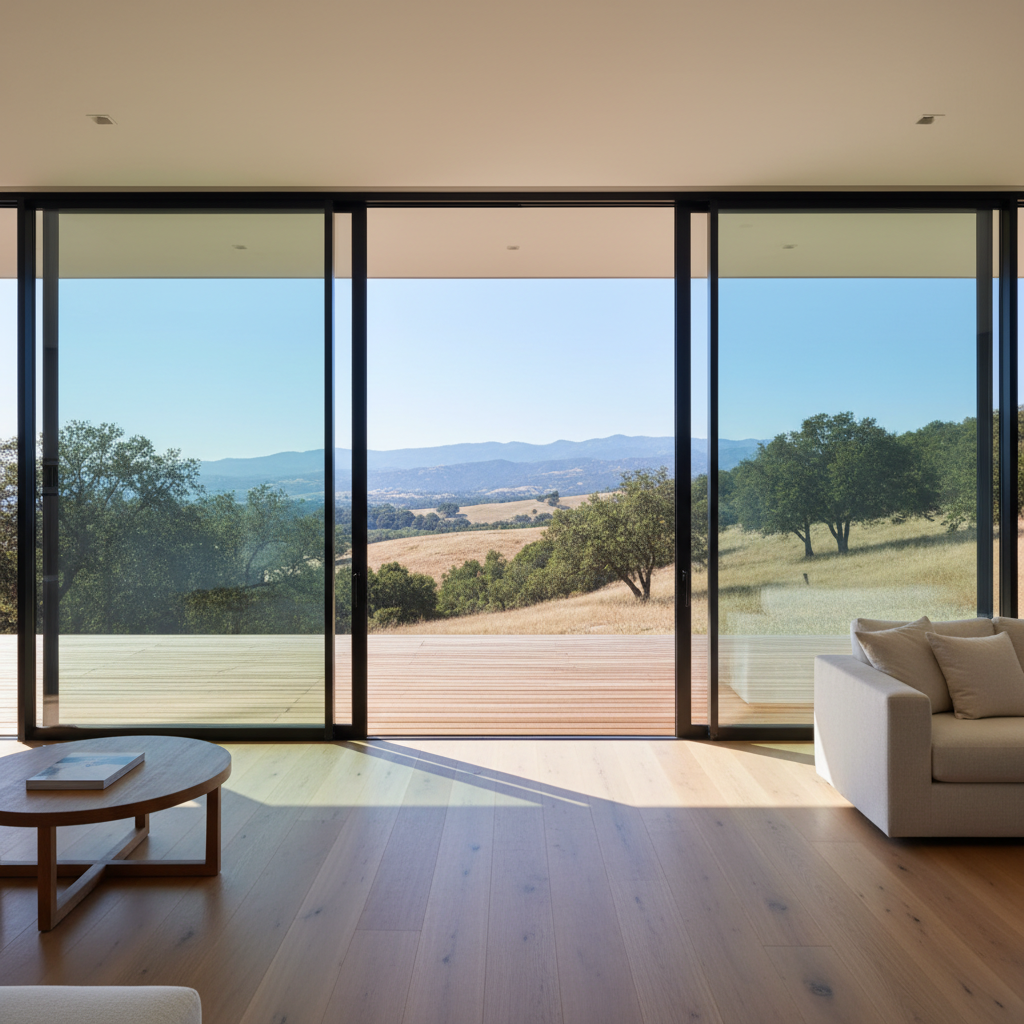
Sliding glass doors are the better choice for most California homeowners who want maximum glass, easy operation, and space efficiency. French doors are the better choice when you want a wider opening, a traditional look, or a door that swings fully open for moving large items in and out. That is the honest answer after 25-plus years of installing both.
Both door types are popular for patio access across Northern California. I see them every week in homes from Auburn and Grass Valley down to Rocklin and Roseville. The right choice depends on your room layout, the size of your opening, your budget, and how you actually use the door day to day. Most homeowners have a gut preference based on looks, but the practical differences — cost, space requirements, energy performance, and security — are what should drive the decision.
I'm John, owner of Colfax Glass in Colfax, CA. I've installed hundreds of sliding and French patio doors across the Sierra Foothills and Northern California coast. This guide covers every factor that matters so you can make a confident choice before spending a dollar.
Quick Comparison: Sliding vs. French Doors at a Glance
The table below captures the core differences between sliding glass doors and French doors across the factors I hear homeowners ask about most often. Sliding doors cost less, take up less space, and give you more glass area. French doors offer a wider clear opening and a more traditional appearance.
If space is tight or the budget is firm, sliding doors usually win. If the opening faces a large patio and you want both panels swung wide for entertaining or moving furniture, French doors are the better fit. The rest of this guide digs into each factor in detail so you can weigh what matters most for your home.
Keep in mind that both door types are available from Milgard and JELD-WEN in vinyl, fiberglass, and wood-clad options. The material you choose affects cost, durability, and energy performance more than the door style itself.
| Feature | Sliding Glass Door | French Door |
|---|---|---|
| Installed Cost | $1,200 – $3,500 | $1,500 – $5,000 |
| Space Required | No swing clearance | 5–6 ft clearance for swing |
| Maximum Glass Area | Up to 90% glass | 60–75% glass |
| Energy Efficiency | Good — fewer gaps | Moderate — more weatherstripping joints |
| Security | Multi-point track locks | Multi-point deadbolt locks |
| Best For | Tight spaces, modern homes | Wide openings, traditional style |
How Much Do Sliding Glass Doors and French Doors Cost?
A standard two-panel sliding glass door runs $1,200 to $2,500 installed in the Sierra Foothills. French doors run $1,500 to $3,500 for a standard double-door set. Those ranges cover the most common configurations I install in homes from Foresthill down through Auburn, Loomis, and Roseville.
Material choice is the biggest cost driver for either door type. Vinyl is the most affordable and handles the foothill climate well. Fiberglass costs more but is the most dimensionally stable option — it doesn't expand and contract as much through our temperature swings. Wood-clad is the premium tier, with real wood on the interior and a protective exterior cladding.
Milgard's Trinsic series is a popular mid-range sliding door that I install frequently. It runs in the fiberglass price range and carries Milgard's full lifetime warranty for the original homeowner. JELD-WEN's W-4500 series is the go-to for homeowners who want wood-clad French doors with a wide range of finish options. Both are solid products that I've seen perform well over the years.
One advantage of working with a foothills contractor is the labor cost. Bay Area installers typically charge 20 to 40 percent more for the same scope of work. My overhead is lower here in Colfax, and that savings passes through to the installed price. The door itself costs the same regardless of location — it's the labor and travel that differ.
| Door Type | Vinyl | Fiberglass | Wood-Clad |
|---|---|---|---|
| 2-panel sliding | $1,200–$1,800 | $1,800–$2,500 | $2,500–$3,500 |
| 3-panel sliding | $2,000–$3,000 | $2,800–$3,800 | $3,500–$5,000 |
| Double French | $1,500–$2,200 | $2,200–$3,500 | $3,000–$5,000 |
| French w/ sidelites | $2,500–$3,500 | $3,500–$5,000 | $4,500–$7,000 |
Space and Layout: What Is the Practical Difference?
Sliding doors operate on a track and need zero swing clearance. The operating panel slides behind the fixed panel, staying entirely within the door frame's footprint. This makes sliding doors ideal for rooms where furniture sits near the door, decks with tight walkways, or hallways where a swinging panel would block traffic.
French doors need 5 to 6 feet of clear floor space for the panels to swing open. Inswing French doors eat into the room — that means no rug, chair, or side table within the swing arc. Outswing French doors extend onto the deck or patio, which means the landing area outside needs to stay clear too.
Many foothill homes have covered back decks, and that actually works well with outswing French doors. The overhang protects the doors from direct rain and sun exposure, and the deck space under the cover is usually kept clear anyway. I've installed outswing French doors on covered decks in Grass Valley and Nevada City that work perfectly because the homeowners already use that deck area as an extension of the living space.
If you're unsure about clearance, I measure it during the in-home visit. Sometimes a room that feels spacious has a couch or kitchen island right in the swing path, and a slider ends up being the smarter call even though the homeowner came in wanting French doors.
Energy Efficiency: Which Door Keeps Your Home Comfortable?
Sliding doors have fewer joints and sealing points, which generally means less air infiltration. A two-panel slider has one moving panel that seals against the frame at the meeting rail and along the top and bottom track. That's a relatively small amount of weatherstripping surface area for air to sneak through.
French doors have more weatherstripping surface area — two door panels, each with seals on all four sides, plus the astragal where the two panels meet in the center. That's significantly more linear feet of seal. More seal means more potential for air leaks over time as the weatherstripping compresses and wears.
According to the U.S. Department of Energy, U-factor measures the rate at which a window or door transmits non-solar heat flow — the lower the number, the better the insulation. A well-installed sliding door from Milgard or JELD-WEN with dual-pane Low-E glass performs well in the foothills, where temps swing from 30-degree winter nights to 100-degree summer days. French doors with the same glass package perform nearly as well when new, but I've found they require more frequent weatherstripping maintenance to hold that performance over 10 to 15 years.
Both door types should meet ENERGY STAR standards for the California climate zone. When shopping, look for the NFRC label and compare U-factor and SHGC numbers directly. Don't rely on marketing claims about energy efficiency — the numbers tell the real story.
Proper installation matters more than the door style for energy performance. A $3,000 French door installed with gaps in the weatherstripping or a crooked frame will leak more air than a $1,500 slider installed plumb, level, and properly sealed. I see this regularly when replacing doors that were installed by general contractors who don't specialize in glass and door work.
Security: Are Sliding Doors or French Doors Safer?
Both modern patio doors offer strong security when equipped with proper hardware. The old reputation of sliding doors as easy break-in targets came from the single-point locks and lift-out tracks used in the 1970s and 1980s. That era is long gone.
Modern sliding doors from Milgard and JELD-WEN use multi-point locking systems that engage at multiple points along the track and frame. Anti-lift blocks built into the track prevent the panel from being lifted out when locked. The glass itself is tempered, which per ANSI Z97.1 safety glazing standards means it's four to five times stronger than standard glass and breaks into small granular pieces rather than sharp shards.
French doors use multi-point deadbolt systems that engage at the top, middle, and bottom of each panel. The inactive panel (the one you don't use as your daily door) locks into the frame with flush bolts at the head and sill. When both panels are locked, the system is solid.
Both door types are secure when properly installed with quality hardware. If security is a top concern, the addition that makes the biggest difference isn't the door style — it's the glass. Laminated glass, which holds together when struck, is available as an upgrade on both sliding and French doors. I recommend it for ground-floor installations in areas with limited visibility from the street.
Weather Performance: How Do These Doors Handle Foothill and Coastal Climates?
The Sierra Foothills and Northern California coast present different challenges, and I install patio doors in both regions. Frame material matters more than door style when it comes to weather durability. The Department of Energy notes that heat gain and heat loss through windows and doors account for 25% to 30% of residential heating and cooling energy use — so choosing the right frame and glass for your climate has a real impact on utility bills.
In the foothills — from Loomis and Rocklin up through Auburn, Colfax, Grass Valley, and Foresthill — the temperature extremes stress door seals and frames. Daily swings of 40 to 50 degrees are common in summer and fall. Vinyl handles expansion and contraction well and is my most common recommendation for foothill installations. Fiberglass is the most dimensionally stable option available, expanding and contracting less than any other frame material. Wood-clad requires more exterior maintenance and is best suited for protected installations under overhangs.
On the coast — Crescent City and Brookings, OR — salt air is the primary concern. Salt corrodes metal hardware, hinges, and track components. Marine-grade hardware upgrades run $50 to $100 more than standard hardware, and they're worth every penny for coastal installations. I've replaced corroded standard hardware on coastal French doors that was only three to four years old. That $75 upgrade would have prevented a $400 service call.
Rain exposure is another consideration. Outswing French doors get more direct weather exposure than sliding doors, which sit in a protected track recessed into the frame. For exposed installations without overhang protection, a sliding door or an inswing French door handles rain better over the long term.
Which Door Should You Choose?
After installing hundreds of patio doors across the foothills and coast, my recommendation comes down to how you'll use the opening and what constraints your space imposes.
Either way, the installation quality matters more than the door style. A properly installed slider or French door will perform well for 20-plus years. A poorly installed door of either type will leak air, stick, and frustrate you within the first year. I offer free in-home measurement and consultation for every patio door project — no cost and no obligation. That visit lets me see the opening, measure the rough framing, assess the floor and wall conditions, and give you a written quote based on the actual job, not a phone estimate.
- Choose sliding if: space is limited near the door, you want maximum glass and natural light, you prefer a clean modern look, or the budget is tight
- Choose sliding if: the door opens onto a narrow deck or walkway where swing clearance is not available
- Choose French if: you want the widest possible clear opening for entertaining, furniture moves, or indoor-outdoor flow
- Choose French if: you prefer traditional aesthetics, the opening faces a protected covered patio, or you want both panels to swing fully open
- Choose either when: the opening size and layout support both options — in that case, personal preference and budget should decide